


Compassionate feedback helps leaders improve team performance, boost retention, and reduce burnout. Research shows it increases employee retention by 27%, discretionary effort by 15%, and adaptability by 35%. Here’s a quick summary of the seven steps to deliver feedback effectively:
- Build a Safe Space: Foster psychological safety by modeling vulnerability and encouraging open dialogue.
- Focus on Actions, Not Character: Use clear, behavior-based feedback to avoid defensiveness.
- Listen First: Practice active listening and acknowledge emotions to build trust.
- Be Clear and Specific: Use structured methods like the SBI framework to give actionable feedback.
- Handle Emotions Well: Manage your emotions and validate others’ feelings during tough conversations.
- Create Plans Together: Collaborate on solutions with clear, measurable goals.
- Schedule Regular Check-ins: Follow up consistently to track progress and maintain accountability.
Compassionate Leadership in Action: Mastering Effective Feedback Techniques
Step 1: Build a Safe Space for Feedback
Creating an environment where team members feel comfortable sharing their thoughts is a cornerstone of effective leadership. Studies reveal that only 26% of leaders successfully foster a sense of psychological safety within their teams. This shortfall has real consequences – teams with a strong sense of psychological safety tend to perform better and experience fewer interpersonal conflicts.
Setting Up Psychological Safety
Building a safe space for feedback requires intentional effort. Right now, only 30% of employees feel their opinions are valued. To shift this dynamic, leaders need to focus on a few key strategies:
- Model Vulnerability: Show your team it’s okay to make mistakes by sharing your own missteps and what you’ve learned from them. This encourages a culture of growth and openness.
- Establish Clear Communication Norms: Regularly schedule team check-ins, one-on-ones, and open forums. These practices make feedback a normal part of work life and help reduce the anxiety surrounding it.
Managing Power Dynamics
Power imbalances often make feedback tricky. In fact, 44% of managers report that providing feedback is stressful, and 21% avoid giving negative feedback altogether. Leaders can address these challenges by adopting a more inclusive and thoughtful approach:
- Use Empowering Language: Frame feedback as a way to grow together. For instance, ask open-ended questions like, “What are your thoughts on how we can tackle this?”.
- Encourage Two-Way Feedback: Actively seek input on your leadership style and decisions. This creates a more balanced dynamic and reinforces the idea that feedback is a shared tool for improvement.
- Be Specific: Base your feedback on clear, concrete examples rather than vague impressions. This makes the conversation more objective and minimizes the impact of hierarchy on the discussion.
Step 2: Address Actions, Not Character
When giving feedback, it’s essential to focus on specific actions rather than making judgments about someone’s character. This helps foster constructive conversations and avoids defensiveness.
Clear, Objective Language
Using clear, action-oriented language can make feedback more effective. Describe observable behaviors and their impact instead of making vague or personal statements.
Examples of action-focused language:
| Instead of | Use |
|---|---|
| "You’re disorganized" | "I’ve noticed you’ve missed three project deadlines this month." |
| "You’re not a team player" | "During yesterday’s meeting, you spoke over David and Muriel several times." |
| "You’re unreliable" | "You’ve arrived 15 minutes late to our last four team meetings." |
"Frame feedback as a growth opportunity, focusing on actions, not character, and offer it as a supportive dialogue, not a monologue of judgment." – Beatrice Redi, Executive Coach
When addressing performance concerns, provide specific examples. For instance, instead of saying, "You’re careless with details", try, "The last three reports had calculation errors in the budget section. Let’s work on improving accuracy in future reports."
By focusing on actions, you avoid assigning labels that can limit someone’s potential for growth.
Skip Personal Labels
Avoiding personal labels is a crucial part of delivering effective feedback. Research indicates that steering clear of labels has a measurable positive effect, with an effect size of 0.61.
How to provide label-free feedback:
- Highlight behavioral patterns rather than fixed traits.
- Explain how the behavior affects the team or business outcomes.
- Relate the feedback to specific situations.
- Suggest actionable steps for improvement.
"Emotionally intelligent feedback consists of three things:
- Recognize the person beyond their behavior
- Validate their emotions
- Focus on personal growth"
- Sven Lauch, Accredited Emotional Logic Coach
For example, instead of labeling someone as "poor at delegation", you could say, "When you delegated core project tasks last week, it created additional workload for team members who were already at capacity, delaying our milestone completion by a few days."
This method encourages compassionate leadership by addressing behaviors constructively, without making it about the individual’s character. It opens the door for growth and improvement while maintaining respect and understanding.
Step 3: Listen Before Speaking
Giving thoughtful feedback starts with listening – not just to words but also to the emotions behind them. When you actively listen, you build trust and gain deeper insights into your team.
Key Listening Skills
Active listening isn’t passive – it’s about being fully engaged and genuinely curious.
Here are some techniques to strengthen your listening:
| Technique | Description | Impact |
|---|---|---|
| Full Presence | Remove distractions and maintain eye contact | Shows respect and signals full commitment to the conversation |
| Reflective Pausing | Wait 3–5 seconds after someone finishes speaking | Allows time to process and respond thoughtfully |
| Clarifying Questions | Ask open-ended questions to explore further | Prevents misunderstandings and shows genuine interest |
"Active listening requires you to listen attentively to a speaker, understand what they’re saying, respond and reflect on what’s being said, and retain the information for later."
Phrases like "What I’m hearing is…" or "Can you help me understand more about…" can show you’re engaged and ensure you’re interpreting things correctly. Beyond words, focus on emotional cues to further improve the quality of your feedback.
Reading Emotional Signals
Effective feedback goes beyond verbal communication. Picking up on non-verbal cues can help you respond in a way that maintains trust and psychological safety.
Watch for these emotional signals:
- Body language: Look for crossed arms, leaning away, or other defensive stances.
- Facial expressions: Notice furrowed brows, tight lips, or lack of eye contact.
- Tone of voice: Pay attention to shifts in pitch, speed, or volume.
- Response patterns: Be alert if someone becomes defensive or withdraws.
If emotions run high, stay calm and acknowledge their feelings. For example, if someone becomes defensive, Kim Castelda suggests saying, "I see this as your responsibility – let’s discuss your perspective.".
"Let the person know that you are not being mean, that you are trying to help them be successful, and still put the issue on the table. The person needs to hear the message as kindly and as empathetically as possible, but the message is the message. Remember, a hard message doesn’t have to come with a hard voice or tone. Deliver it thoughtfully and considerately." – Kim Castelda
Research shows that when leaders act on feedback, employees’ sense of being heard doubles. By mastering these listening and emotional awareness skills, you can create discussions that encourage growth and understanding.
Step 4: Make Feedback Clear and Specific
Giving precise and actionable feedback is essential for growth and understanding. When feedback is vague or unclear, it can leave team members confused, making it harder for them to improve.
Using the SBI Method
A structured approach like the Situation-Behavior-Impact (SBI) method can make feedback clearer and more effective. This method helps you provide factual, judgment-free input by breaking feedback into three key components:
| Component | Purpose | Example |
|---|---|---|
| Situation | Sets the context | "During last week’s client presentation…" |
| Behavior | Focuses on specific actions | "…you explained the project timeline clearly and addressed all of the client’s questions…" |
| Impact | Highlights the outcome | "…building client trust." |
Deliver feedback as soon as possible and maintain a neutral tone to ensure it’s constructive and well-received.
Remove Unclear Language
Research shows that only 26% of employees strongly agree that the feedback they receive improves their work. To make feedback more effective, avoid vague statements and instead offer actionable suggestions.
Examples of turning unclear feedback into specific guidance:
- Instead of: "Your presentation needs work."
Say: "Your slides lacked visual aids, and your delivery felt rushed." - Instead of: "You’re not meeting expectations."
Say: "I noticed you missed the project deadline. Let’s create a detailed project schedule with clear milestones."
When feedback is specific and focused on strengths, employees are 15% more engaged at work. To ensure your feedback is impactful, emphasize:
- Observable actions, not assumptions
- Concrete examples rather than generalizations
- Clear steps for improvement
- Measurable goals and outcomes
"Clarity is kindness. Ambiguous feedback leaves employees guessing, while clear, direct and constructive input helps them grow." – Lynda Silsbee, Alliance for Leadership Acceleration
sbb-itb-6cc8587
Step 5: Handle Emotions Well
Managing emotions effectively is key to giving and receiving feedback. In fact, research highlights that emotional intelligence is responsible for 58% of performance across all job types. Navigating emotions during feedback discussions requires thoughtful techniques for both parties involved.
Self-Control Techniques
Leaders need to stay composed, even when feedback conversations get tough. To prepare and respond thoughtfully, try these strategies:
| Time Frame | Self-Control Practice | Purpose |
|---|---|---|
| Before Feedback | Deep breathing exercises | Calm your mind and reduce anxiety |
| During Feedback | Use a 6-second pause technique | Avoid reacting impulsively |
| After Feedback | Reflective journaling | Process emotions and spot patterns |
To further develop emotional self-regulation:
- Build in buffer time before and after tough conversations to reset.
- Dedicate 10 minutes daily to mindfulness meditation.
- Exercise regularly to manage stress effectively.
- Prioritize 7–8 hours of sleep to maintain emotional steadiness.
"Getting to the top and staying there… present unique and formidable challenges. To do either requires great Self-Control… I viewed Self-Control, both personal and by our team, as a sixth Bruin on the court during my years at UCLA. That invisible sixth player was as important as any of the visible players."
- John Wooden, legendary coach of the UCLA Bruins
Once you’ve mastered self-regulation, the next step is to focus on understanding and validating your team’s emotions.
Show Understanding
Acknowledging someone’s emotions doesn’t mean you agree with their perspective – it means you recognize their feelings while staying focused on the purpose of the feedback. Studies show that emotional validation improves communication and reduces defensiveness.
Here are some examples of validation statements you can use:
- "I understand you’re frustrated by…"
- "I hear your concerns about…"
- "Let’s address these feelings while working toward solutions…"
For instance, when Jane, a manager, needed to discuss performance issues with her team member Sorab, she started by acknowledging his creativity and positive energy. This approach shifted the tone of the conversation, leading to more productive outcomes.
Acknowledging emotions doesn’t derail the feedback process – it creates a sense of safety, helping both parties engage in meaningful discussions and work toward real change.
Step 6: Create Plans Together
After building emotional understanding, the next step is to work together on actionable improvement plans. Research suggests that companies encouraging collaboration are five times more likely to perform at a high level compared to those that don’t.
Joint Problem-Solving
The best improvement plans come from teamwork. Instead of dictating solutions, focus on creating a space where collaborative problem-solving thrives.
Here’s a helpful framework to guide collaborative planning:
| Phase | Action | Purpose |
|---|---|---|
| Preparation | Share relevant data and context | Ensure everyone is informed |
| Discussion | Encourage diverse perspectives | Explore a range of potential solutions |
| Planning | Define specific actions and owners | Establish accountability |
| Support | Identify required resources | Address potential obstacles |
For example, Hitachi Energy used collaborative leadership strategies to reduce turnover by 80% and boost engagement by 92%.
"If you bring the appropriate people together in constructive ways with good information, they will create authentic visions and strategies for addressing the shared concerns of the organization or community." – David Chrislip and Carl Larson
Once collaborative solutions are in place, the next step is to establish measurable outcomes to track progress effectively.
Define Success Metrics
After co-creating solutions, it’s crucial to define clear success metrics. Without them, even the best intentions can feel vague and unattainable.
Here are two key approaches to consider:
- Set SMART Goals: Ensure goals are Specific, Measurable, Achievable, Relevant, and Time-bound.
- Create a Shared Timeline: Include milestones and scheduled check-ins to track progress and maintain accountability.
An example of this in action: An automotive manufacturing company introduced collaborative goal-setting as part of their leadership program. The result? A 21% improvement in productivity, yielding $4.4 million in returns.
"Most people think that empathy is something you have only with friends and family, but in reality, it is also a priority in business." – Satya Nadella
To make sure your metrics stay meaningful:
- Prioritize growth indicators over just performance numbers.
- Balance short-term wins with long-term development goals.
- Allow flexibility to adjust targets when circumstances shift.
- Measure progress in ways that inspire and encourage, rather than overwhelm.
Step 7: Schedule Regular Check-ins
Regular check-ins are the glue that keeps collaborative planning on track, ensuring progress and fostering meaningful change. Studies reveal that employees who have consistent one-on-one meetings with their managers are nearly three times more likely to feel engaged.
Plan Follow-up Meetings
To keep everyone aligned and accountable, schedule follow-up meetings with a clear purpose but allow for some flexibility. Different types of check-ins address different needs:
| Meeting Type | Frequency | Focus | Format |
|---|---|---|---|
| Quick Updates | Weekly | Progress review, immediate concerns | 15-30 min, informal |
| Deep Dives | Monthly | Strategic discussion, long-term goals | 60 min, structured |
| Growth Reviews | Quarterly | Development progress, career path | 90 min, comprehensive |
- Set consistent meeting times to show commitment and ensure predictability.
- Prepare by reviewing notes and relevant data beforehand.
- Document action items to maintain accountability.
"If you must cancel, reschedule the meeting right away, ideally for the same week – even if that means moving the meeting up rather than moving it out. Some time together is better than none at all." – Steven G. Rogelberg, Organizational Scientist
After planning, it’s just as important to celebrate progress and reinforce positive momentum.
Recognize Progress
Recognition during these check-ins isn’t just a nice-to-have – it’s a powerful motivator. In fact, 80% of employees who receive meaningful weekly feedback report being fully engaged.
- Highlight specific actions or achievements that showcase growth.
- Keep the conversation forward-looking by addressing next steps.
- Tailor recognition to each individual’s preferences for maximum impact.
The benefits are clear: employees are 3.6 times more likely to deliver exceptional work when they receive regular, meaningful feedback. Yet, only 17% of millennials say they get this kind of feedback at work.
"Leadership is not about being in charge. It is about taking care of those in your charge." – Simon Sinek
Regular check-ins are more than just meetings – they’re opportunities to show support, offer recognition, and demonstrate thoughtful leadership. To keep the momentum going:
- Celebrate immediate successes while tracking long-term achievements.
- Maintain open communication between formal check-ins.
- Adjust meeting frequency to suit individual needs and progress.
These small but consistent efforts can make a big difference in sustaining engagement and driving growth.
Conclusion: Better Leadership Through Better Feedback
Compassionate feedback has the power to reshape how teams interact and redefine workplace dynamics. Research indicates that organizations emphasizing emotional intelligence in their feedback processes can outperform their competitors by as much as 30%. This approach not only boosts employee engagement and retention but also leads to higher sales and profitability.
Here’s a snapshot of the measurable benefits:
| Impact Area | Improvement |
|---|---|
| Team Performance | Up to 30% boost |
| Customer Satisfaction | 66% increase |
| Overall Productivity | 36% higher |
| Job Performance Impact | 58% improvement |
Even small acts of compassion make a difference. Studies reveal that just 40 seconds of empathetic interaction can significantly reduce anxiety among team members. On average, individuals encounter nine opportunities to show compassion every day.
"When leaders focus less on being ‘in charge’ and more on taking care of those who are in their charge, that’s a sure sign of a compassionate leader." – Simon Sinek
The data paints a clear picture: emotionally intelligent feedback strengthens team bonds, fosters resilience, and sparks innovation. Leaders who prioritize compassion report being 50% more effective in delivering feedback that resonates positively with their teams. These results demonstrate that weaving compassion into feedback practices doesn’t just improve metrics – it builds stronger, more cohesive teams.
The ripple effect of compassionate feedback extends far beyond individual interactions. It creates an environment where trust, collaboration, and performance thrive. Leaders who embrace emotional intelligence in their feedback foster a culture of cooperation and long-term success.
As Theodore Roosevelt once said, "Nobody cares how much you know until they know how much you care". This timeless insight captures the essence of effective leadership: showing genuine care strengthens connections and amplifies the impact of every piece of feedback.
About the Heart Leadership Institute
The Heart Leadership Institute is dedicated to promoting leadership rooted in empathy and emotional intelligence. Founded by Arnaud Saint-Paul, the Institute aims to redefine leadership by emphasizing values like presence, inner peace, purpose, joy, detachment, selflessness, and unity.
The Heartful Method
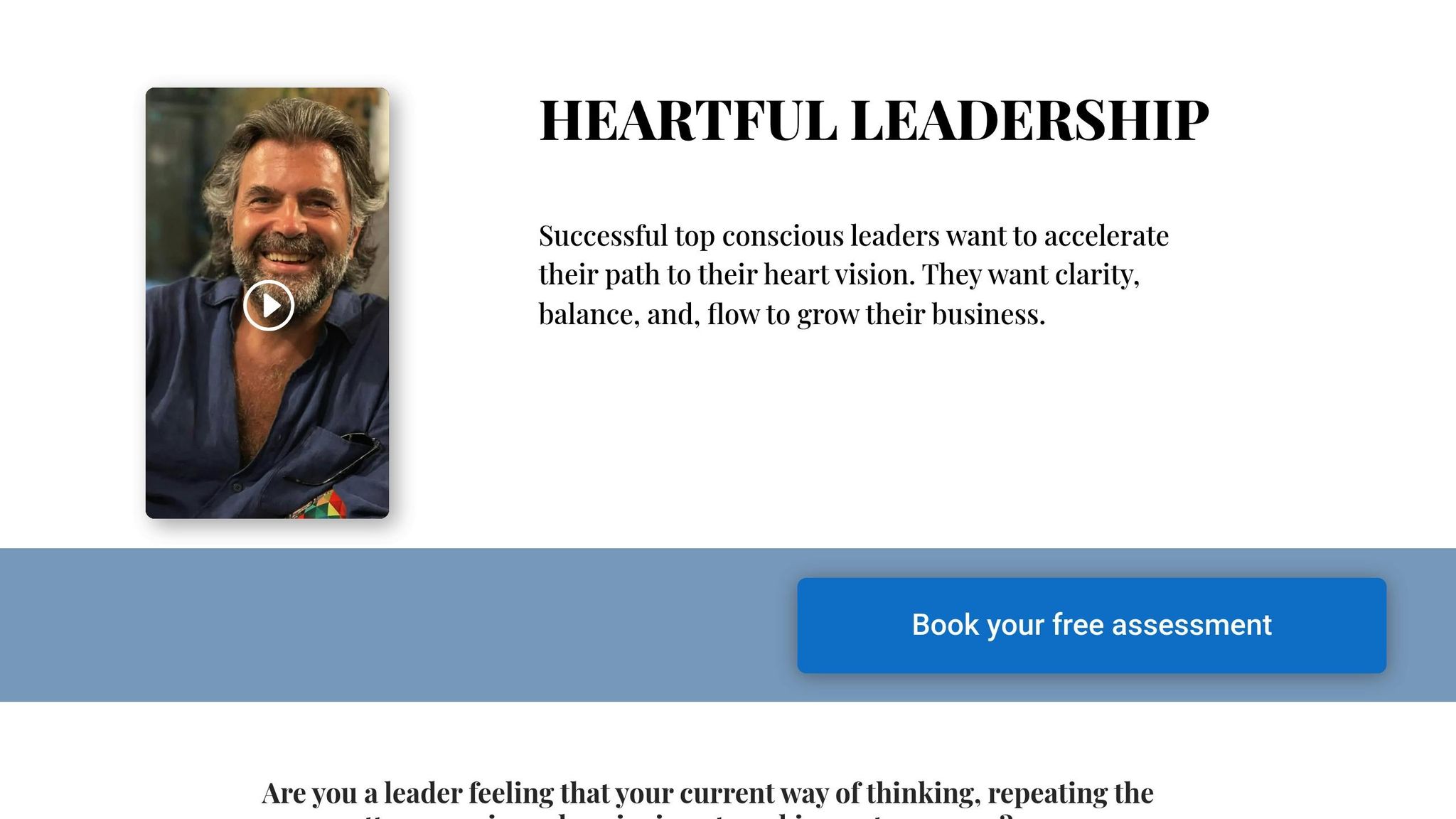
At the core of the Institute’s mission is the Heartful Method™ – a program designed to nurture leaders who lead with compassion and self-awareness. Here’s how the program is structured:
| Component | Duration | Focus Areas |
|---|---|---|
| Visual Rewiring | 12 weeks | Developing self-awareness |
| Guided Sessions | 1 hour weekly | Personal and leadership growth |
| Peer Practice | Ongoing | Learning through community |
This method helps participants build the skills they need to lead with heart and connect deeply with others.
Heart Leader Network

To complement the Heartful Method™, the Heart Leader Network provides a space for leaders to strengthen their ability to lead with compassion. Members gain access to valuable resources, connect with peers, and participate in regular sessions focused on applying heart-centered feedback techniques. This community not only supports leadership development but also enhances the ability to give feedback in a thoughtful and impactful way.
The Institute also offers certification programs for individuals and organizations, equipping them to share the principles of compassionate leadership. Leaders who participate often report improved feedback skills that resonate more effectively with their teams.
FAQs
How can leaders navigate power dynamics to give feedback that is well-received?
To handle power dynamics effectively when providing feedback, leaders should prioritize emotional intelligence and create an environment of psychological safety. It’s important to recognize how your role might influence how the feedback is received. Approach these conversations with empathy and a spirit of collaboration to help ease any feelings of power imbalance.
Make the discussion a two-way street by encouraging open dialogue. Invite the other person to share their thoughts and listen actively to their perspective. Strive for a balance by pairing constructive criticism with positive reinforcement, making the feedback both motivating and actionable. When leaders demonstrate genuine care and respect, they cultivate an atmosphere where feedback is not just acknowledged but appreciated – ultimately driving better outcomes.
How can leaders improve their emotional intelligence to provide more compassionate feedback?
Improving emotional intelligence (EI) plays a huge role in delivering feedback with empathy and care. A good starting point for leaders is working on their self-awareness – taking the time to examine their emotions and understanding how these feelings shape their behavior and interactions. Simple practices like self-reflection or journaling can be incredibly helpful in this process.
Another helpful step is asking for constructive feedback from colleagues or mentors they trust. Honest input from others can reveal blind spots and deepen their ability to empathize with different perspectives. Additionally, incorporating mindfulness into their routine can make a big difference. It helps with emotional regulation, allowing leaders to remain calm and thoughtful, even in tough conversations.
By focusing on these approaches, leaders can create stronger bonds with their teams and provide feedback in a way that encourages growth and mutual understanding.
How can leaders structure regular check-ins to effectively track progress and ensure accountability?
To ensure regular check-ins are effective, stick to a consistent schedule – whether that’s weekly or bi-weekly. A predictable routine gives teams a steady framework to track progress, address issues early, and stay focused on their goals.
Having a clear agenda is key to keeping these meetings efficient and productive. Here’s a simple structure you can follow:
- Quick updates: Team members briefly share their progress.
- Key topics: Focus on specific challenges or important goals.
- Action items: Assign tasks and outline next steps.
- Reflections: End with team feedback or insights.
This setup promotes accountability, encourages open dialogue, and ensures everyone stays aligned on shared objectives.
Related posts
- The Compassionate Leader’s Playbook: 5 Ways to Transform Decision-Making
- Leading with Compassion: Key Strategies for Effective Leadership
- How to Facilitate Emotionally Intelligent Feedback
- How to Build a Feedback Culture in Teams
Measure your own leadership coherence
The Heart Leadership Index is a structured self-assessment: 35 questions across seven pillars, about seven minutes, and your map is yours to read.
Take the HLI free