


In today’s unpredictable world, understanding and measuring organizational resilience is critical for businesses to thrive. Resilience ensures operations continue during disruptions, supports smarter decisions, improves performance, and strengthens risk management. Here’s a quick breakdown of what to measure and how:
Key Resilience Metrics:
- Business Recovery: Track recovery time, financial buffers, supply chain flexibility, and customer service continuity.
- Employee Well-being: Monitor engagement, adaptability, satisfaction, and access to wellness resources.
- Risk Management: Evaluate risk assessments, incident response times, crisis readiness, and regulatory compliance.
How to Measure:
- Use frameworks like ISO 22316 to assess leadership, culture, resources, and structure.
- Conduct crisis simulations to test and refine responses.
- Regularly review metrics quarterly and annually to adapt to new challenges.
Strong leadership is essential, and methods like the Heart Leadership Institute’s Heartful Method focus on building emotional intelligence and self-awareness to enhance resilience.
Start by aligning leadership support, choosing the right tools, and setting up consistent reviews to keep your organization prepared for the unexpected.
Achieve Organizational Resilience: Thrive in a Changing World
Core Resilience Metrics
Track an organization’s resilience by focusing on specific metrics that assess strength and preparedness across critical areas.
Business Recovery Metrics
Metrics for business continuity, such as RTO (Recovery Time Objective) and RPO (Recovery Point Objective), help define recovery benchmarks. Key indicators to monitor include:
- Operational Recovery Speed: Average time required to restore essential systems.
- Financial Buffer Ratio: Emergency funds available compared to monthly operating costs.
- Supply Chain Flexibility: Number of alternative suppliers and backup shipping routes.
- Customer Service Continuity: Service levels maintained during disruptions.
While operational recovery is essential, employee well-being plays a crucial role in overall resilience.
Employee Well-being Metrics
A strong workforce is the backbone of resilience. Assess both quantitative and qualitative aspects of employee health, engagement, and adaptability. Key metrics include:
| Metric Category | Key Indicators | Target Range |
|---|---|---|
| Engagement | Participation in resilience training | >85% |
| Adaptability | Change readiness assessment scores | 7.5–9.0/10 |
| Well-being | Employee satisfaction index | >80% |
| Support | Access to wellness resources | 100% |
By ensuring employees are supported and engaged, leaders can build a stronger, more resilient organization.
Risk Management Metrics
Complement recovery and employee metrics with rigorous risk monitoring to cover all bases. Important metrics to track include:
- Risk Assessment Completion: Percentage of departments performing regular evaluations.
- Incident Response Time: Average time taken to address and resolve issues.
- Crisis Readiness: Scores from emergency drills and simulations.
- Compliance Achievement: Percentage of regulatory requirements successfully met.
Regularly review and update these metrics – ideally every quarter – to ensure they remain relevant and effective.
Measurement Methods and Systems
Effective systems combine well-established frameworks with practical testing to provide a clear understanding of resilience.
Standard Assessment Models
The ISO 22316 framework identifies key areas for evaluating resilience:
| Assessment Area | Key Indicators | Measurement Focus |
|---|---|---|
| Leadership | Decision-making effectiveness | Strategic direction and crisis response |
| Culture | Adaptability metrics | Employee engagement and innovation |
| Resources | Resource allocation | Financial and operational flexibility |
| Structure | Process integration | Cross-functional coordination |
Testing and Practice Scenarios
Crisis simulations are a practical way to measure and improve resilience. These involve:
- Simulating scenarios like cyberattacks or supply chain disruptions
- Tracking response times and decision-making efficiency
- Recording lessons learned and identifying improvement areas
- Adjusting protocols based on findings to strengthen team readiness
These exercises help refine strategies and prepare teams for real-world challenges.
Heart Leadership Institute‘s Method
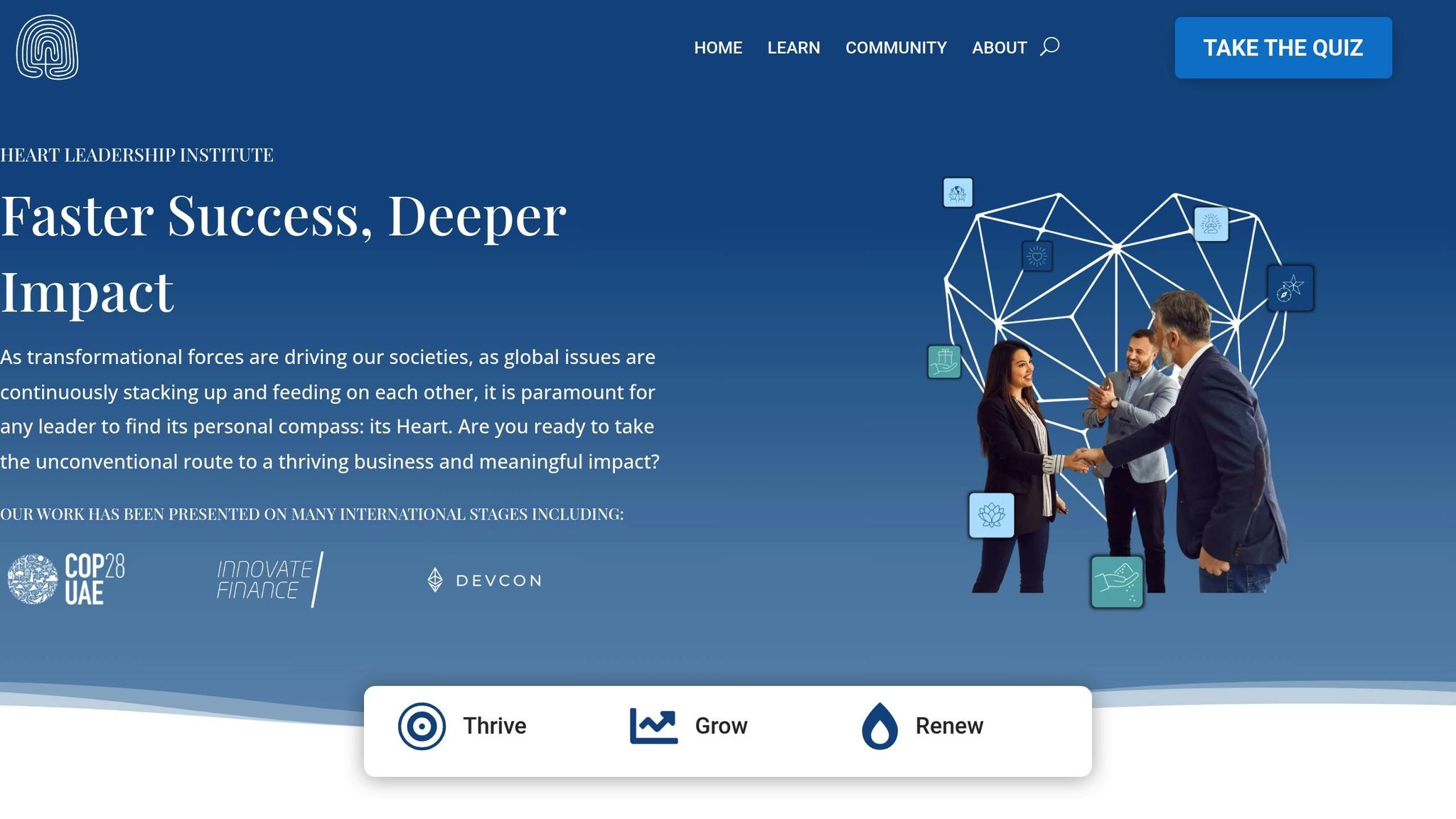
The Heart Leadership Institute offers a unique approach to resilience by focusing on leadership development through emotional intelligence and self-awareness. Their Heartful Method emphasizes cultivating inner peace, presence, and joy as essential traits for resilient leaders.
"What previously felt like rowing now feels increasingly like sailing. I was able to find my voice as a leader and motivate the team better than ever – leading us to a great year with lots of highlights and amazing growth." – Nodar Daneliya, co-founder @Shuttle.rs
The method includes:
- Assessing leadership against the 7 Pillars of Heart Leadership
- Building inner peace and presence
- Encouraging creative problem-solving
- Strengthening team resilience through improved leadership practices
This approach equips organizations to navigate change while maintaining productivity. The Institute’s programs offer structured support for leaders aiming to develop these skills, ultimately boosting organizational resilience.
"Heart leadership can significantly contribute to an easier business growth by fostering a culture of innovation and heart intelligence. This environment encourages creative problem-solving and resilience." – Heart Leadership Institute
sbb-itb-6cc8587
Setting Up Resilience Measurement
Getting Leadership Support
Measuring resilience effectively starts with strong leadership backing. Leaders play a crucial role in allocating resources and embedding resilience into the organization’s core. They need to view resilience measurement as a strategic priority for long-term success.
Here are the key components to gain leadership support:
- Resource allocation: Budgeting for tools, training, and expert advice.
- Cultural integration: Making resilience part of performance evaluations.
- Strategic alignment: Tying resilience goals to overall business strategies.
"Heart leadership can significantly contribute to an easier business growth by fostering a culture of innovation and heart intelligence." – Heart Leadership Institute
Selecting Measurement Tools
Choosing the right tools depends on your goals. Think about what you need to measure and how you’ll use the data. Here’s a breakdown:
| Tool Category | Purpose | Key Features |
|---|---|---|
| Assessment Frameworks | Evaluate current state | Standardized metrics, benchmarking |
| Monitoring Systems | Track performance | Real-time data, automated alerts |
| Analysis Platforms | Gain insights | Custom reports, trend analysis |
The Heart Leadership Institute’s Heartful Method is a standout option. It provides a structured framework to evaluate leadership capabilities, focusing on the human elements of resilience. This method is particularly effective for understanding how leadership impacts organizational strength.
"Arnaud’s teachings got me into places I would have never thought on my own. He’s helping me find my joy. It is rare that someone understands human condition as well as Arnaud." – Rob Angel, Creator of the board game PICTIONARY
Once you’ve chosen your tools, keep the process moving by regularly reviewing your metrics.
Regular Review Process
Quarterly Reviews:
- Compare metrics to your targets.
- Update tools and criteria to address new challenges.
- Refine methods as needed.
Annual Strategic Reviews:
- Assess the effectiveness of your measurement approach.
- Incorporate lessons learned throughout the year.
- Ensure alignment with your broader goals.
Assign specific team members to handle data collection, analysis, and reporting. This ensures you can quickly address any gaps or tackle new challenges as they arise. Regular reviews keep your resilience strategy effective and actionable.
Next Steps
Start building your resilience framework today. These actions will help align your measurement framework with effective leadership practices.
Leverage the Institute’s tools to assess leadership performance based on the 7 Pillars of Heart Leadership. Here’s what you can do:
- Plan a Strategic Session: Book a one-on-one session with the Heart Leadership Institute to outline your resilience strategy.
- Join the Heart Leader Network: Connect with other leaders who are committed to creating stronger, more resilient organizations.
Use the Heartful Method to strengthen your organization’s ability to adapt and grow. This approach combines innovation with emotional intelligence to support long-term business success.
"What previously felt like rowing now feels increasingly like sailing. I was able to find my voice as a leader and motivate the team better than ever – leading us to a great year with lots of highlights and amazing growth."
– Nodar Daneliya, co-founder of Shuttle.rs
FAQs
What steps can an organization take to apply the ISO 22316 framework for measuring resilience?
The ISO 22316 framework provides guidance for organizations to strengthen their resilience by identifying key principles and practices. To apply this framework effectively, start by understanding its core components, such as leadership commitment, resource optimization, and continual improvement.
Begin with a thorough assessment of your organization’s current resilience levels, using tools and metrics aligned with ISO 22316. From there, establish clear goals and action plans to address gaps, ensuring all stakeholders are involved in the process. Regularly review and adapt your strategies to stay aligned with evolving challenges and opportunities. For leaders seeking deeper insights, programs like those offered by the Heart Leadership Institute, Tapuat can provide valuable guidance on fostering resilience through heart-centered leadership principles.
How can leaders build resilience into their organizational culture?
Leaders can foster resilience within their organizations by prioritizing adaptability, encouraging innovation, and cultivating a supportive environment that values creative problem-solving. Building resilience starts with empowering teams to embrace change and view challenges as opportunities for growth.
Heart-centered leadership plays a vital role in this process by enhancing self-awareness, emotional intelligence, and meaningful collaboration. By focusing on these principles, leaders can create a culture that not only navigates adversity effectively but also thrives in the face of uncertainty.
How does the Heartful Method strengthen organizational resilience?
The Heartful Method from the Heart Leadership Institute empowers leaders to build organizational resilience by fostering self-awareness, emotional intelligence, and a heart-centered approach to leadership. Through this method, leaders develop skills to navigate challenges with clarity, adaptability, and purpose.
By focusing on inner peace, presence, and meaningful connection, the Heartful Method helps organizations create a culture of trust, collaboration, and sustainable growth. This transformative approach supports leaders in driving positive change within their teams and communities.
Related posts
- Emotional Intelligence for Resilient Leadership
- How Emotional Intelligence Improves Team Resilience
- Emotional Resilience vs. Emotional Intelligence
- Heart-Centered Leadership for Resilient Organizations
Measure your own leadership coherence
The Heart Leadership Index is a structured self-assessment: 35 questions across seven pillars, about seven minutes, and your map is yours to read.
Take the HLI free