


Somatic awareness – the ability to notice and understand your body’s sensations – can transform how leaders manage stress, communicate, and inspire trust. Here’s what you need to know:
- Why It Matters: 89% of leaders link executive presence to career growth, and 93% of communication is non-verbal. Understanding your body helps you stay calm, project confidence, and build trust.
- Key Techniques:
- Body Scanning: Identify and release tension.
- Posture Alignment: Stand tall, relax shoulders, and maintain eye contact.
- Breathing Methods: Use techniques like 4-7-8 breathing to stay focused and composed.
- Team Impact: Leaders who stay grounded create safe, collaborative environments where teams thrive.
Start small: Practice daily breathing, posture checks, and body scans to strengthen your leadership presence.
Step 1: Building Basic Body Awareness
Body Scanning Techniques
Body scanning is a simple yet powerful way to manage stress and enhance decision-making. By systematically scanning your body from head to toe, you can identify areas of tension – common culprits include the shoulders, neck, and jaw.
Here’s how to perform a body scan effectively:
- Get Comfortable: Sit or lie down in a relaxed position. Take a few deep breaths into your belly to help you focus.
- Scan Your Body: Start at your feet and slowly work your way upward. Spend 15–30 seconds on each area, noticing any tightness or discomfort.
- Release Tension: As you identify tension, breathe into those areas and visualize the stress melting away with each exhale.
Improving Posture for Better Presence
Good posture isn’t just about looking confident – it can also influence how you feel and how others perceive you. Here are the key components of posture to focus on:
| Posture Component | How to Implement | Why It Matters |
|---|---|---|
| Standing Stance | Keep feet shoulder-width apart and your weight evenly distributed. | Signals stability and confidence. |
| Shoulder Position | Relax your shoulders and pull them slightly back. | Reflects openness and authority. |
| Head Alignment | Hold your head straight with your chin parallel to the ground. | Shows attentiveness and engagement. |
| Arm Position | Keep your arms relaxed at your sides, using open gestures. | Communicates approachability and confidence. |
Research suggests that posture can have a greater impact on behavior than even one’s rank or role.
Breathing Methods for Leaders
"A calm and focused leader is a more effective leader."
Breathing exercises can be a game-changer for managing stress and staying composed under pressure. Try these techniques:
- The 4-7-8 Method:
- Inhale through your nose for 4 counts.
- Hold your breath for 7 counts.
- Exhale slowly through your mouth for 8 counts.
- Physiological Sigh: For quick stress relief, take two short inhales through your nose followed by one long exhale through your mouth.
A study with veterans showed that structured breathing techniques, like SKY Breath Meditation, significantly reduced anxiety after just one week, with effects lasting up to a year.
"Breathwork is particularly useful to help get your body back to baseline, or a place of reconciliation."
Another effective method is diaphragmatic breathing: inhale for 4 counts and exhale for 6 counts. This type of breathing promotes calmness and focus, helping you lead with clarity.
Step 2: Using Body Awareness to Strengthen Teams
Understanding Body Language
Did you know that up to 93% of communication is non-verbal? As a leader, sharpening your ability to read and respond to these unspoken signals can transform how you connect with your team.
Here are a few key non-verbal cues to watch for:
| Body Language Element | What to Observe | Leadership Response |
|---|---|---|
| Facial Expressions | Micro-expressions, eye contact, tension | Reflect positive expressions and maintain steady eye contact |
| Posture | Slouching, crossed arms, leaning | Demonstrate openness with an engaged posture |
| Gestures | Hand movements, head nodding, fidgeting | Use intentional and clear gestures |
| Voice Tone | Pitch changes, speaking pace, volume | Adjust your tone to match the emotional context |
Keep in mind that non-verbal cues can differ across cultures, so it’s important to understand your team members’ backgrounds when interpreting these signals.
"The most important thing in communication is hearing what isn’t said." – Peter Drucker
By paying attention to these subtle signals, you can stay composed and lead effectively – even in high-pressure situations.
Maintaining Calm Under Pressure
A leader’s ability to remain calm during challenges directly influences the team’s focus and productivity. When you stay physically composed, you set the tone for the entire group.
One quick way to regain composure is with the 4-4-6 Reset Method:
- Inhale for 4 counts
- Hold for 4 counts
- Exhale for 6 counts
This simple breathing technique is a powerful tool to help you stay grounded during moments of stress.
"In an often discontented world, cultivating contentment through somatic awareness and vagus nerve activation is a skill every leader can develop. By practicing these techniques, you’ll not only foster a calm, composed presence for yourself but also positively impact your team’s ability to navigate challenges with confidence and clarity." – Jennifer Zach, Zach Coaching
A calm leader doesn’t just manage their own stress – they reinforce a sense of security for the entire team.
Creating Safe Team Environments
Once you’ve mastered body awareness and composure, the next step is creating an environment where your team feels supported and safe.
Your physical presence plays a big role in establishing psychological safety. When you stay grounded – through intentional breathing and open posture – you signal stability and encourage trust. This creates a space where team members feel comfortable sharing ideas and taking thoughtful risks.
Here’s how to foster a safe environment:
- Maintain an open posture and steady eye contact to show you’re fully present
- Use breathing techniques to project calm and confidence
- Pay attention to signs of physical tension in your team and adjust your approach as needed
- Acknowledge team members’ experiences before offering solutions
Step 3: Daily Leadership Body Practices
Quick Body Awareness Exercises
Incorporate these quick exercises into your daily routine to enhance your leadership presence and focus.
Start your day with the Morning Presence Protocol:
| Time | Exercise | Purpose |
|---|---|---|
| 2 min | Mindful breathing | Ground yourself and build awareness |
| 3 min | Body scan | Pinpoint and release tension |
| 1 min | Posture alignment | Cultivate a confident and open stance |
When facing high-pressure situations, rely on the 4-4-6 Reset Method mentioned earlier to regain composure and clarity.
Leadership Self-Reflection Methods
After completing your morning exercises, dedicate time to reflect on how your body and emotions influence your leadership. This practice can deepen your understanding of somatic leadership.
Use a Somatic Leadership Journal to track:
- Physical sensations you experienced during key interactions
- Emotional triggers and how they manifested in your body
- Techniques that helped you stay grounded
- Areas where you could improve your responses
Set aside 15 minutes at the end of each day for this reflection. Pay attention to how your body reacted in different leadership scenarios and what those reactions reveal about your approach.
"Reflective learning is a well-grounded theory based on the capacity of an individual to reflect on their own words and actions and to undertake a learning process through such reflection. This can be done every day at work while you are on the job." – Professor Peter Miller
Team Meeting Body Awareness
Apply somatic practices during team meetings to foster a more intentional and connected atmosphere. Here are some ways to integrate these techniques:
- Pre-Meeting Centering
Spend a minute practicing belly breathing. Tune in to your surroundings, notice any physical sensations, and observe your thoughts and emotions. - During-Meeting Presence
Engage in active somatic listening by staying aware of:- Your posture and breathing
- Non-verbal cues from team members
- The overall energy and dynamics in the room
- Mid-Meeting Reset
If you feel tension or a disconnect, take a moment to:- Straighten your spine
- Plant your feet firmly on the ground
- Shift your breathing to your belly for calmness
"Somatic awareness is a big strength for a leader. It is what Leadership presence is based on. Somatic leadership is an idea that all leaders can consider. It is a very integral part of leadership." – Sailaja Manacha
Doug Silsbee – Presence as an Essential Competency – IDC-Coaching
sbb-itb-6cc8587
The Heart Leadership Institute Tapuat Method
The Heart Leadership Institute Tapuat employs the Heartful Method, a unique approach that blends somatic awareness with heart-centered leadership to cultivate a deeper sense of presence.
Body Awareness in the Heartful Method
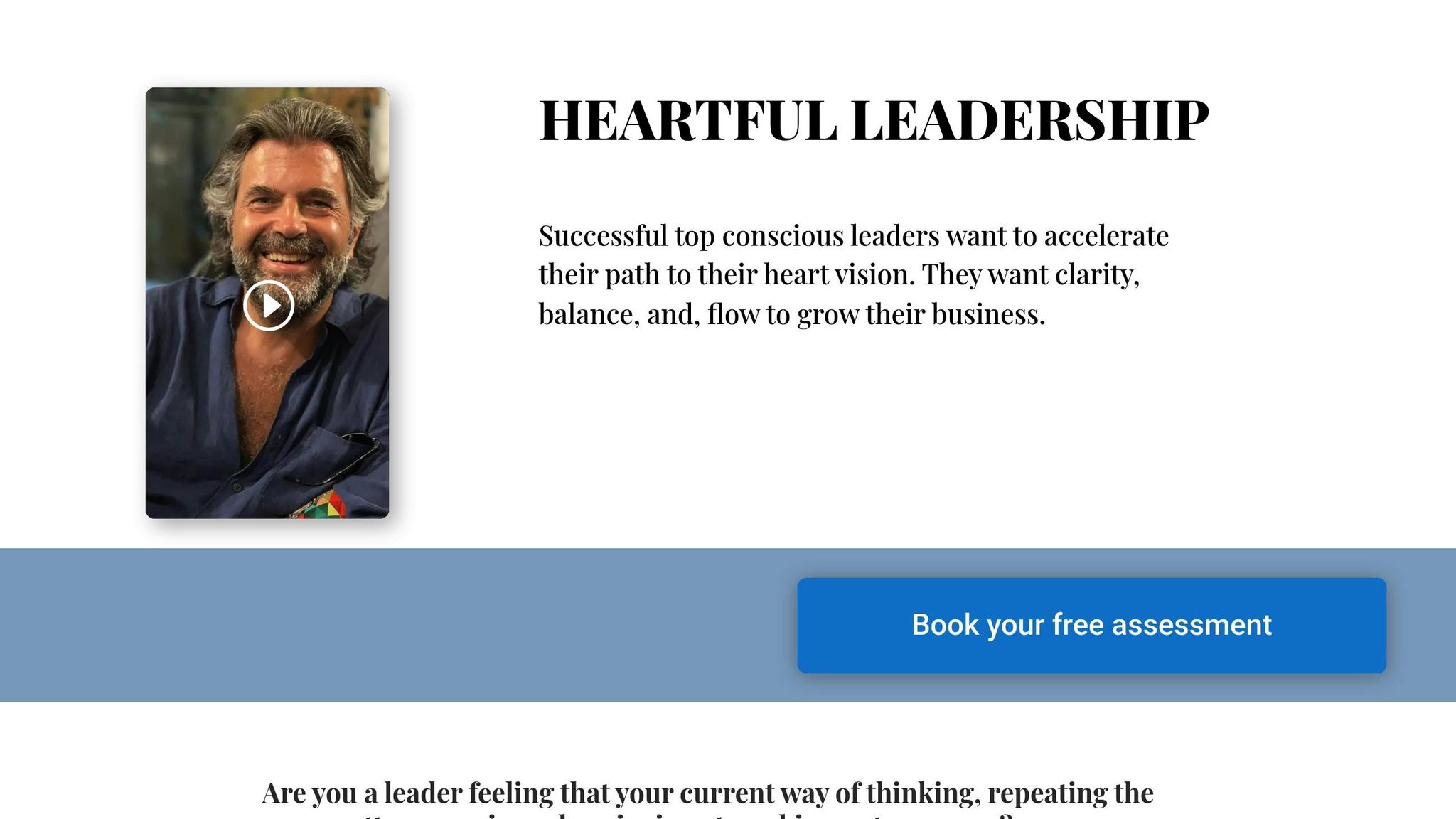
At the core of the Heartful Method is the connection between physical awareness and genuine leadership. This process nurtures what’s referred to as "Heart Intelligence".
Key somatic practices form the foundation of this method:
| Practice | Purpose | Benefit |
|---|---|---|
| Breathwork | Emotional regulation | Greater composure under pressure |
| Gentle movement | Relieving muscle tension | Increased physical confidence |
| Mindfulness | Body-mind integration | Clearer decision-making |
These techniques enhance body awareness and emotional regulation, creating a harmony between body and heart that strengthens leadership presence.
Leadership Development Programs
The Heartful Method extends into structured programs designed to help leaders refine their presence and authenticity:
- Heartful Guidance: Daily practices to build awareness of the body and emotional intelligence.
- Heartful Discovery: A tailored assessment of leadership style, informed by somatic cues.
- Heartful Method: An immersive program aimed at transforming presence and fostering authentic leadership.
A key tool used in these programs is the FEBI (Focus, Energy, Balance, Influence) assessment, which helps leaders identify their energy patterns and understand how these influence their leadership style.
Heart Leaders Community
To complement its programs, the Heart Leadership Institute offers a community that supports the practical application of the Heartful Method. Reina Hallab, a trust catalyst, encourages leaders to, "Begin your journey to lead with authenticity and purpose".
"Through our Heartful Method, we’ve guided countless leaders to tap into their Heart Intelligence and embrace a life led by purpose, presence, and joy."
– Arnaud Saint-Paul
The community focuses on three essential components:
| Element | Description | Impact |
|---|---|---|
| Peer Support | Group practice sessions | Shared learning and mutual growth |
| Expert Guidance | Access to certified guides | Individualized development |
| Practical Application | Implementation in daily life | Stronger team dynamics |
Together, these programs and the supportive community create opportunities for leaders to develop a present-centered, effective leadership style.
Conclusion: Putting Body Awareness into Practice
Main Body Awareness Principles
Understanding and tuning into your body – often referred to as somatic awareness – plays a crucial role in developing a strong leadership presence. This involves practices like body scanning to detect stress early, regulating your breathing to clear your mind, and maintaining good posture to project confidence .
Studies show that leaders who develop somatic awareness can experience measurable improvements:
| Benefit | Impact | Supporting Evidence |
|---|---|---|
| Stress Management | Lower blood pressure and better sleep | Clinical studies report reduced cortisol levels |
| Team Communication | Improved understanding of non-verbal signals | 65-95% of communication relies on non-verbal cues |
| Leadership Presence | Increased trust and team engagement | Emotional intelligence enhances team relationships |
These findings make it clear: incorporating somatic practices into your routine can make a real difference.
Starting Your Body Awareness Practice
To bring these principles into your daily life, start small. Even 10 minutes a day can help you build a foundation for stronger leadership.
"Somatic awareness is an important aspect of developing good leadership skills, which is highly relevant and recommended for leaders"
Here’s how you can begin:
- Morning Body Scan: Take a moment each morning to tune into your body. Notice sensations, tension, or areas of ease.
- Breath Regulation: Use the 4-7-8 breathing technique – inhale for 4 seconds, hold for 7, and exhale for 8. It’s a simple way to calm your mind and body.
- Grounding Exercise: Pause during the day to feel your feet firmly on the ground. This helps center your focus and brings you back to the present.
"Somatic practice is a practice of awareness that is rooted in experiencing the sensations of your body, both in motion and in stillness"
You don’t need to overhaul your entire lifestyle to see results. These small, consistent efforts align well with the Heartful Method’s emphasis on cultivating genuine leadership qualities. With time, these practices can help you lead with greater presence and authenticity.
FAQs
How does somatic awareness help leaders manage stress and communicate more effectively?
The Role of Somatic Awareness in Leadership
Somatic awareness helps leaders stay in tune with their physical and emotional states, making it easier to recognize and manage stress. By paying attention to how their bodies react under pressure – like a racing heart or tense shoulders – they can stay grounded and maintain their composure, even in difficult moments. This ability to self-regulate allows for clearer thinking and better decision-making, no matter the circumstances.
It also plays a big role in improving communication. When leaders are aware of their own emotions, they can express themselves more genuinely and respond to their teams with greater empathy. This emotional clarity fosters trust, encourages open conversations, and builds stronger connections within the team. In essence, somatic awareness helps leaders lead not just with their minds, but with their whole selves.
How can leaders use somatic awareness to improve their daily presence and effectiveness?
Leaders can strengthen their impact and presence by weaving somatic awareness into their daily habits. Simple practices, like mindful breathing or doing a quick body scan, can help reconnect with physical sensations and reduce stress. The best part? These exercises take just a few minutes and can bring a sense of calm and focus.
Another helpful strategy is starting meetings with a short mindfulness check-in. This gives everyone a moment to tune into their emotional and physical states, encouraging openness and trust within the team. When leaders make somatic awareness a regular part of their routine, they can foster deeper connections, communicate with greater authenticity, and inspire confidence in those they lead.
How can non-verbal communication help leaders build trust and create a supportive team environment?
Non-verbal communication is a key factor in how leaders establish trust and create a supportive atmosphere within their teams. Simple actions, like maintaining steady eye contact, adopting open and welcoming body language, or showing genuine emotions through facial expressions, can help team members feel secure and connected.
Leaders who are attuned to non-verbal cues and know how to use them effectively can boost their credibility and presence. This, in turn, makes it easier to inspire confidence and encourage teamwork. When team members feel both understood and respected, trust grows, and stronger, more meaningful connections can thrive within the group.
Related posts
- Somatic Awareness for Leaders: A Guide
- How Somatic Intelligence Shapes Leadership
- Mind-Body Connection in Leadership Confidence
- Top Somatic Exercises for Leadership Growth
Measure your own leadership coherence
The Heart Leadership Index is a structured self-assessment: 35 questions across seven pillars, about seven minutes, and your map is yours to read.
Take the HLI free